
Warranty Backed
Basement Wall Repair & Wall Stabilization
At Upstate Structural Repair, we stabilize basement walls with proven solutions, including wall anchors, wall bracing, and carbon fiber reinforcement, along with targeted crack repair strategies when appropriate.
How We Fix The Problem
- You Receive A Free Inspection
- We Diagnose The Real Issue
- We Install A Permanent Solution
Choose Your Basement Wall Issue
A basement wall that’s cracking, bowing, or leaning isn’t something you want to “wait and see.” These signs often mean the wall is under pressure and slowly moving. The good news: many basement wall issues can be stabilized without tearing out the entire wall.
Bowing, Leaning & Tipping Basement Wall Repair
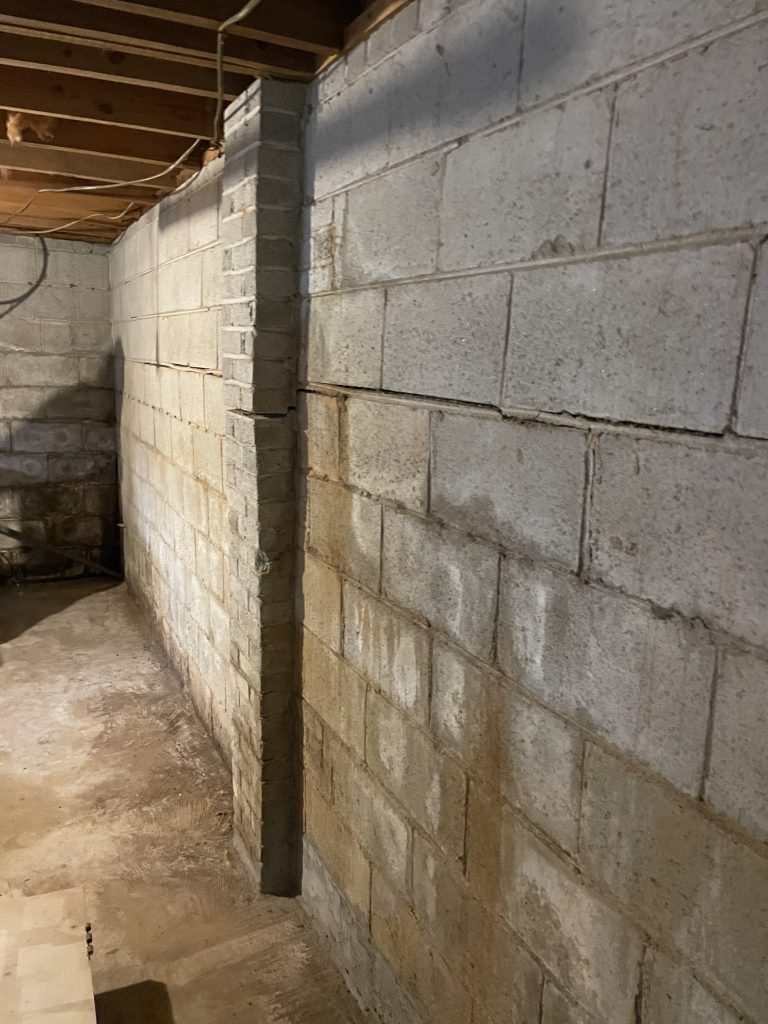
Wall movement from pressure or shifting—stabilize before it worsens.
Bowing, Leaning, & Tipping Solutions >
Basement Wall Crack Repair
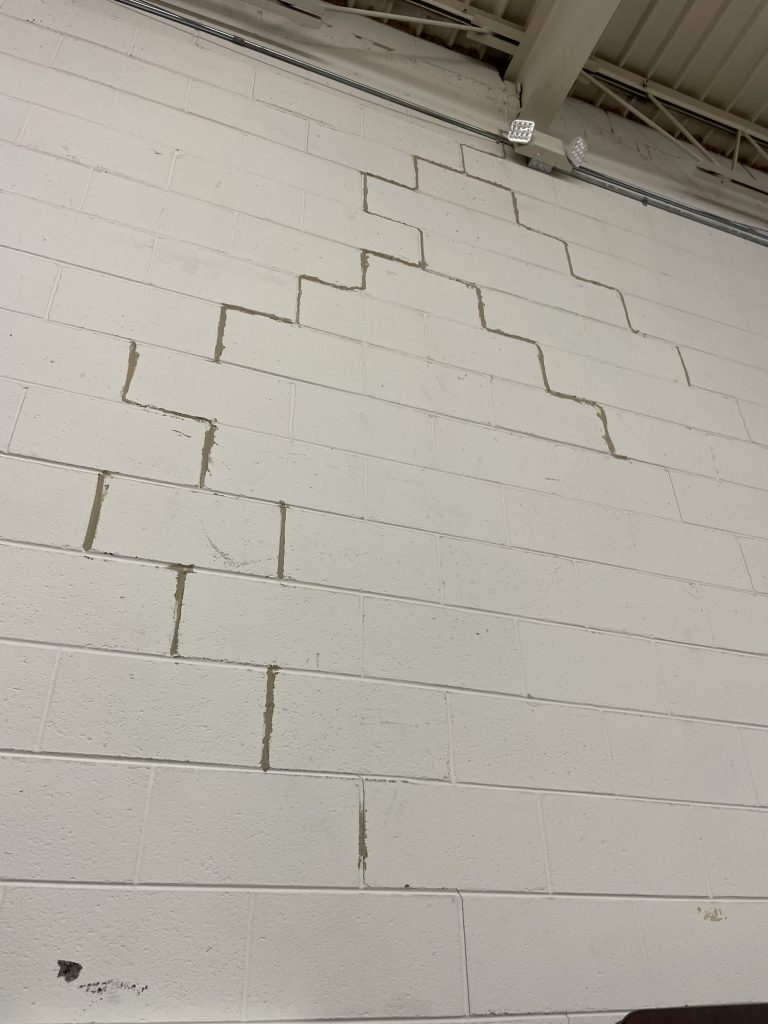
Vertical, horizontal, or stair-step cracks can signal movement, get it checked.
Wall Crack Solutions >
Basement Water Intrusion Repair
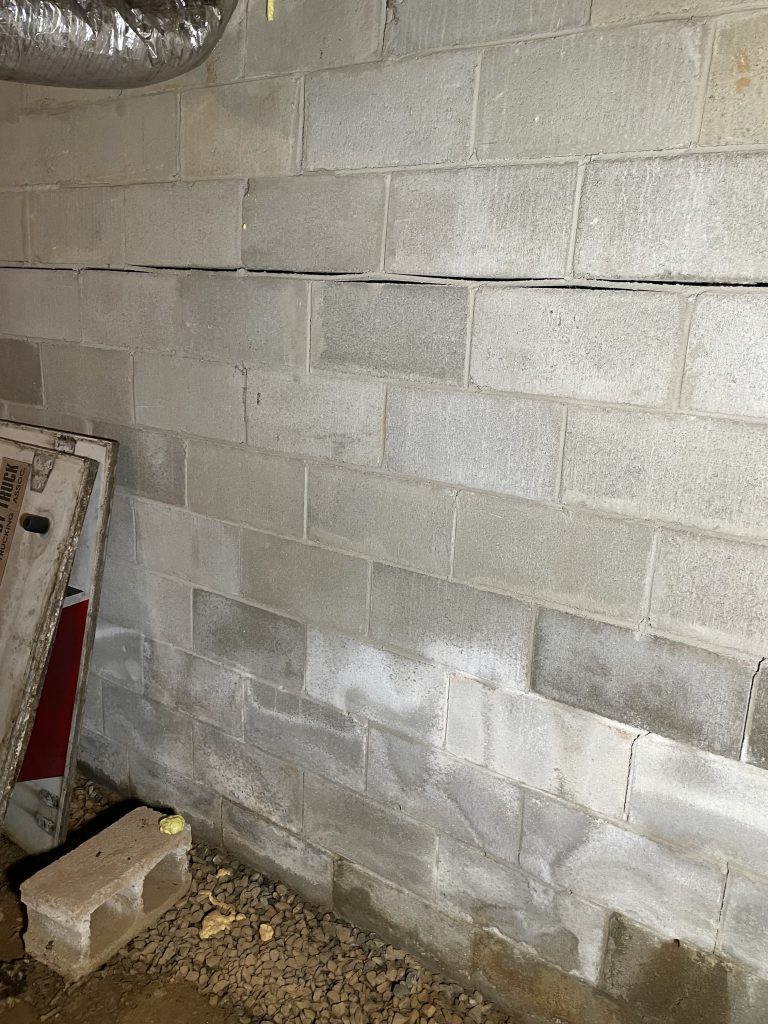
Leaks, damp walls, or efflorescence often mean water pressure is building.
Water Intrusion Solutions >
Choose Your Licensed & Insured Repair
There are many ways a basement wall can fail, and just as many ways to repair one. The right solution depends entirely on what’s actually happening, which is why understanding the symptoms matters before jumping to fixes.
Basement Waterproofing
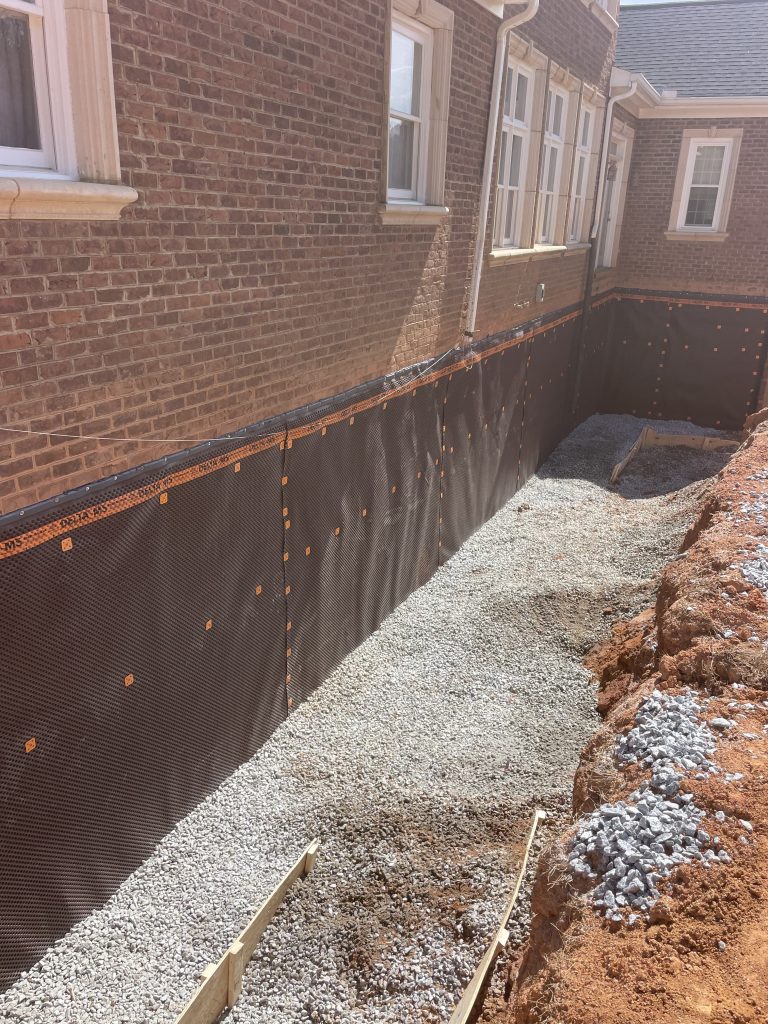
Drainage and sump pump solutions to control water and relieve pressure.
Basement Waterproofing Solutions >
Carbon Fiber Straps
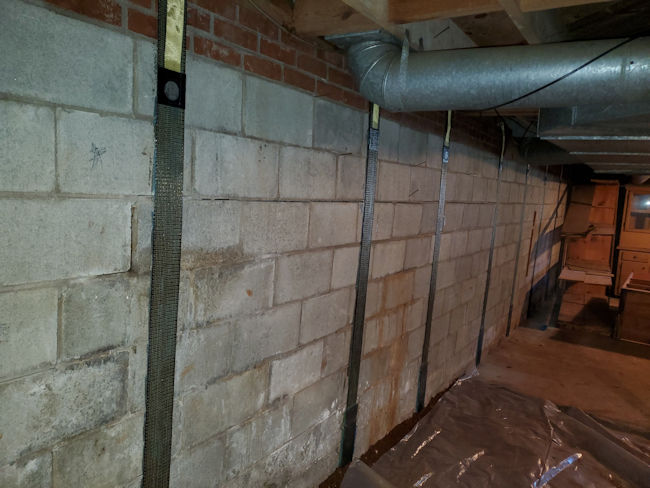
Low-profile stabilization for certain crack/bowing conditions.
Carbon Fiber Solutions >
Steel Beams / Wall Bracing

Rigid reinforcement that holds bowing walls in place.
Wall Bracing Solutions >
Wall Anchors / Tiebacks

Anchor systems that pull walls back and prevent further movement.
Wall Anchor Solutions >
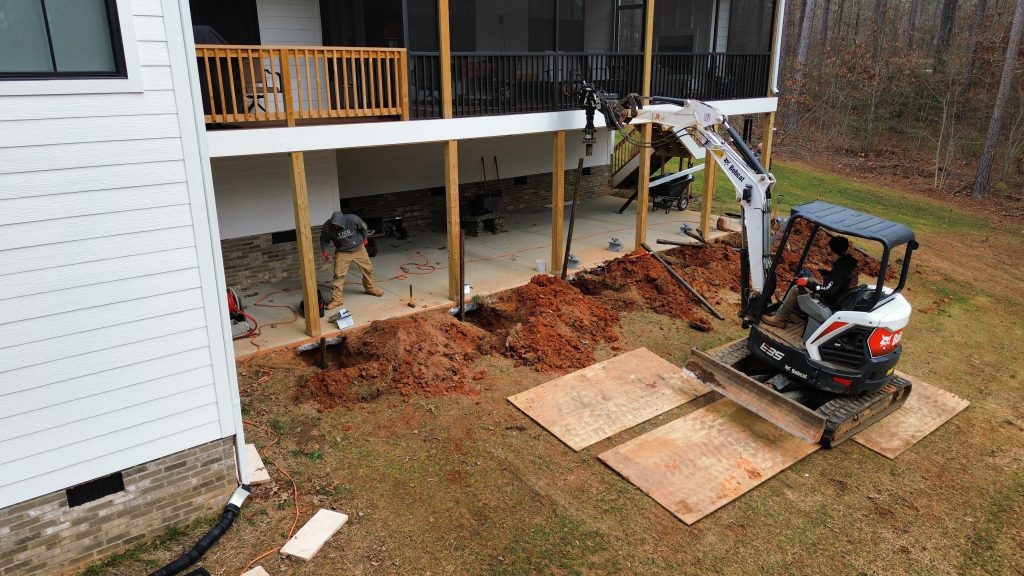
Push Piers
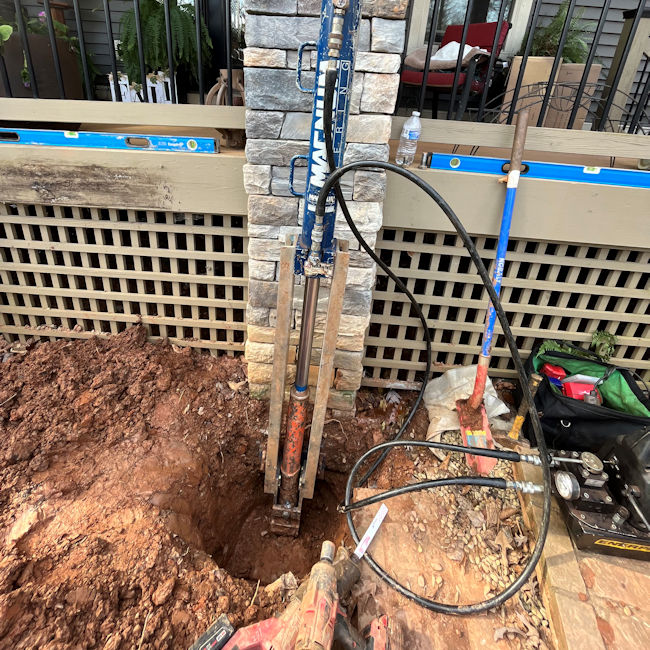
Lift and stabilize foundations suffering from settlement (when applicable).
Push Pier Solutions >
What Causes Basement Walls to Bow or Crack?
Your basement walls are doing a significant job, holding back tons of soil, managing groundwater, and supporting the structure above. When they start to fail, they usually give you warning signs first.
Basement walls usually move because of pressure from the outside. Over time, soil expands and pushes against the wall, especially with moisture changes, poor drainage, or certain soil conditions. Once a wall begins to move, the cracks and bowing often become more noticeable.
Why Homeowners Choose Basement Wall Repair
Basement wall issues rarely stay the same. Cracks can widen, walls can bow further, and water pressure can keep building. Homeowners choose basement wall repair to stop the movement early, protect the structure, and avoid a much larger, and more expensive, problem later.
Benefits Of Repair Homeowners Care most about
- Stops wall movement before it worsens (bowing, leaning, tipping)
- Protects the structure above (floors, framing, door/window alignment)
- Addresses the real cause (pressure, shifting, weakened support—not just the crack)
- Prevents recurring damage (repairs that keep reopening don’t solve movement)
- Targeted solutions, not full replacement (carbon fiber, bracing, anchors, piers)
- Improves safety and peace of mind (a stable wall is a safer home)
- Helps preserve home value (especially for resale and inspections)
If you want a simple next step, start with an inspection. We’ll tell you what’s happening and what it would take to fix it.
Our Basement Wall Repair Process
Step 1 – Inspection & Measurements
We identify crack patterns, wall movement, and the best stabilization path.
Step 2 – Recommend the Right Solution
Bracing, helical or deadman tieback, i-beam and carbon fiber solutions are provided based on what your wall is doing.
Step 3 – Stabilize & Reinforce
Clean installation, clear expectations, and a long-term repair strategy.
Basement Wall Repair FAQs
Can a basement wall lean without cracking?
Yes. A wall can tilt inward at the top connection without an obvious crack pattern.
Why do cracks come back after repair?
If the wall is still moving, cosmetic patching can fail. Stabilization may be needed.
What do stair-step cracks mean in a block basement wall?
Often settlement, but multiple or crossing stair-step cracks can indicate pressure and movement.
Is a horizontal crack in a basement wall dangerous?
It can be. Horizontal cracks often indicate lateral pressure and wall movement and should be evaluated promptly.
Are vertical cracks in basement walls normal?
Some thin, flush vertical cracks can be normal. Widening or offset cracks should be inspected.
Serving the Upstate of South Carolina
Foundation and crawl space repair across twelve counties of the Upstate and beyond. Hover a city to see it on the map. Not listed? Call and ask. If we don't cover you, we'll tell you straight.