
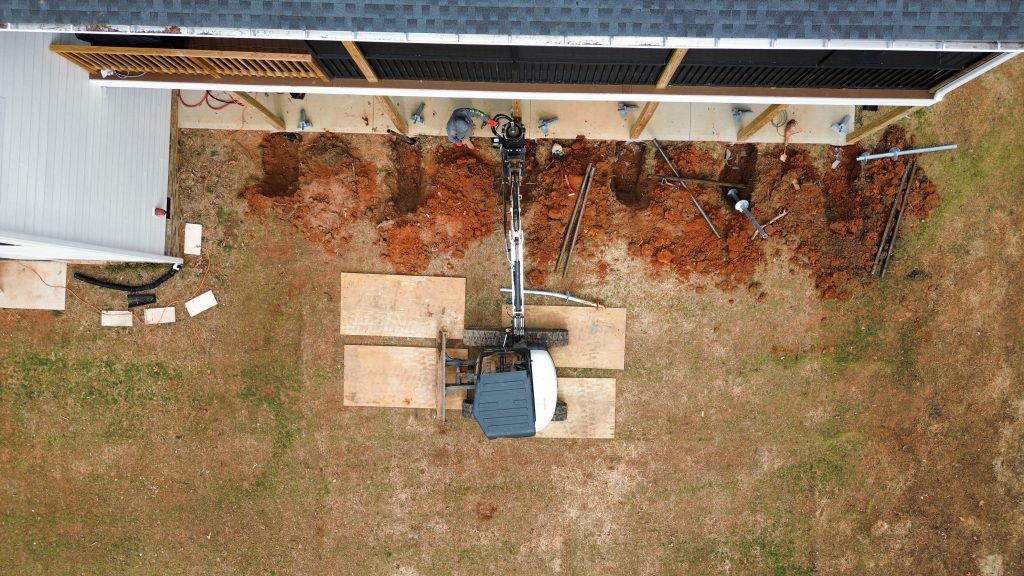
Helical Pier Foundation Repair (Helical Piles)
When the soil beneath a foundation can no longer support the weight of the structure above it, the foundation begins to sink. Helical piles, also called helical piers, are one of the most effective and reliable solutions because they bypass failing soil and transfer the load to stable ground deeper below. Foundation settlement is serious, but it is also highly fixable when it’s diagnosed correctly and stabilized early. If you’re seeing cracks, sticking doors/windows, sloping floors, or gaps that suggest one part of the home has dropped relative to another, settlement may be the cause.
Signs You May Need Helical Piers (piles):
- Doors or windows that stick, won’t latch, or show gaps at the frame
- Diagonal cracks from door/window corners (especially on multiple levels)
- Floors that slope noticeably toward a wall or in one direction
- Gaps between walls and the ceiling or floor
- Stair-step cracks in brick/block exterior
- A section of the home (or chimney) appearing lower than the rest
Get Your Free Estimate
Tell us what you’re seeing. We’ll call to set up a free inspection.
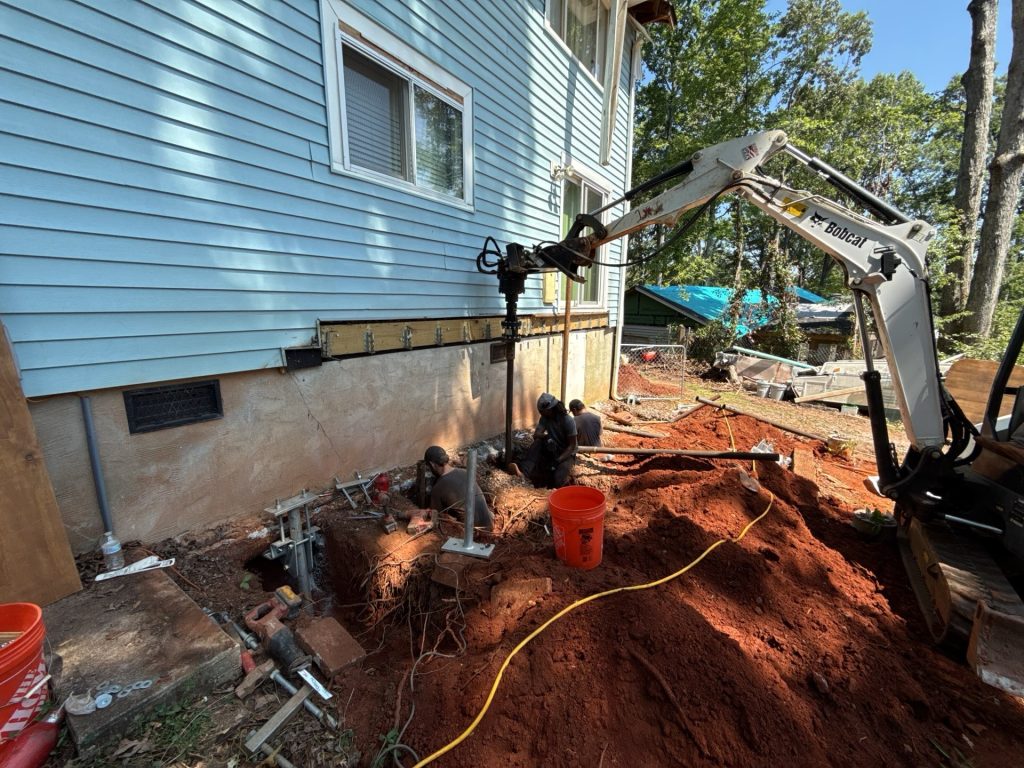
Why Foundations Sink
A foundation is only as stable as the soil supporting it. Settlement happens when soil loses capacity due to:
- Erosion/washout: water movement removes fine soil particles and creates voids
- Poor fill/compaction: fill soil continues compressing long after construction
- Expansive/unstable soils: clay-rich soils swell when wet and shrink when dry
- Organic decomposition: buried roots/debris compress as they break down
In all cases, the correct long-term approach is the same: bypass failing soil and anchor the foundation to stable bearing below—which is exactly what helical piers do.
What Is a Helical Pier?
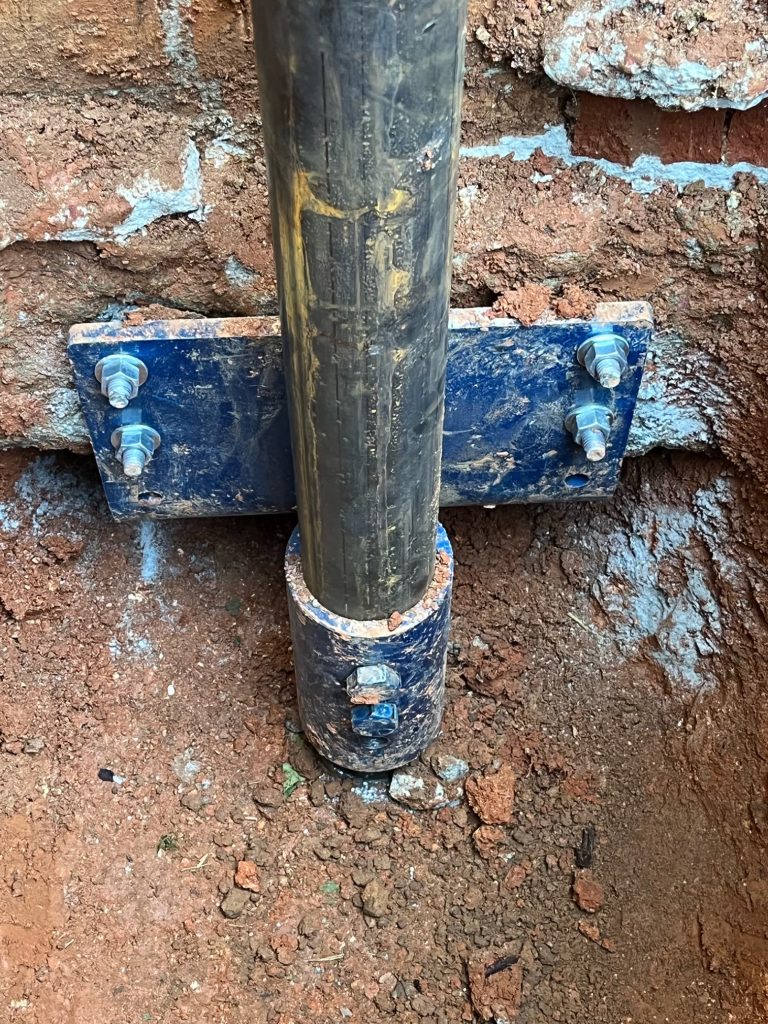
A helical piers is a steel shaft with one or more helix plates welded along its length, like a heavy-duty screw designed to be driven deep into the earth.
How helical piers are installed:
- A hydraulic drive head rotates the pile into the ground (often on an excavator or skid steer)
- Sections are added as the pile advances deeper
- Installation continues until it reaches soil (or bedrock) capable of supporting the required load
How Capacity Is Verified (Real-Time)
A major advantage of helical pier installation is that capacity can be evaluated during installation by monitoring torque, the resistance the soil provides against rotation. There’s a known relationship between torque and load capacity in the soil being penetrated. This gives real-time feedback about what’s happening underground, rather than relying only on a predetermined depth.
Connecting to the Foundation (and Lifting)
Once the helical pile reaches the required depth and capacity:
- A steel bracket is attached to the foundation footing
- The foundation load is transferred through the bracket, down the pile, into stable soil
- Hydraulic lifting can raise the settled section back toward its original position
Important expectations about lifting
- Lift is the goal, but full recovery isn’t always possible (depends on time, structure condition, soil response)
- Stabilizing and lifting does not automatically “erase” past damage—cosmetic repairs often follow (drywall, trim, masonry, siding)
What Helical Piers Can Carry
Helical piles can be designed to carry significantly more load than is currently present, allowing for long-term stability and even future changes (additions/renovations) when engineered appropriately.
Do Helical Piers Require a Structural Engineer?
In virtually all cases, yes. Helical pier foundation repair typically requires a structural engineer to design:
- pile layout and spacing
- pile size/configuration
- stamped drawings for permitting
Permitting and inspection are part of doing this correctly and protecting the repair for resale and documentation.
Settlement tends to get more expensive the longer it continues. The sooner the movement is identified and stabilized, the more options you have and the less damage accumulates. If you want a simple next step, start with an inspection. We’ll tell you what’s happening and what it would take to fix it.
Helical Pier Repair FAQs
Do helical piles work for all foundations?
They’re widely used for settlement in many foundation types, but the engineered design depends on loads and site conditions.
Will cracks and sticking doors disappear after lifting?
Not always. Stabilization fixes the structural cause; cosmetic repairs typically follow.
Can helical piles lift a settled foundation?
Often, yes. Lift is possible through the bracket system, but full recovery depends on conditions and how long settlement has occurred.
How deep do helical piles go?
They go as deep as needed to reach stable bearing and required capacity—depth varies by soil conditions.
Are helical piles and helical piers the same thing?
Yes. “Helical piles” and “helical piers” are commonly used interchangeably in searches and by contractors.
Serving the Upstate of South Carolina
Foundation and crawl space repair across twelve counties of the Upstate and beyond. Hover a city to see it on the map. Not listed? Call and ask. If we don't cover you, we'll tell you straight.