
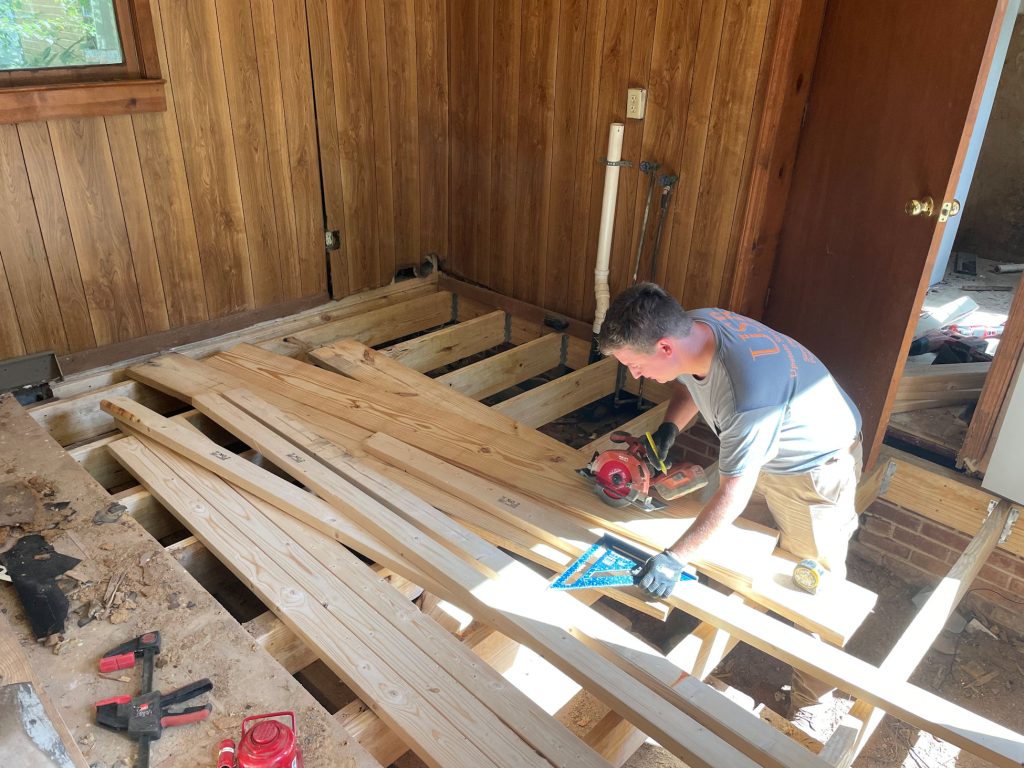
All About Our Jacks, Support Posts, and Added Beams
When there’s a dip or slope in the floor, an annoying bounce in the middle of a room, a depression near a column or at one side of an opening, a crack over a doorway, or a “hump” down a hallway, the issue is often missing or insufficient support in the floor system. If the original framing is still in good condition (not damaged by dry rot, wet rot, fungus, or termite damage), the solution is usually adding supports under the house, most commonly floor jacks, support posts, or an added support beam.
Common Signs You May Need Added Support Under the House:
- Bouncy / springy floors in a room or hallway
- Uneven floors or a noticeable slope from one side to the other
- A localized dip near a cased opening or close to a column
- A crack forming above a doorway (sometimes related to movement)
- A long “soft” or unstable feel through the middle of the home
Get Your Free Estimate
Tell us what you’re seeing. We’ll call to set up a free inspection.
The Two Most Common Fixes
Floor Jack or Support Post in One Location (Point Load Fix)
If the problem is concentrated in one spot, like one side of an opening dipping, or a single area that feels unstable, installing a support post or permanent floor jack directly under that location can stabilize the floor and, when appropriate, help bring it back toward its original position. This is the type of work people are searching for when they look up:
- floor jacks installation
- floor jacks near me
- support posts under house
- floor support columns installation
Add a Support Beam With Posts/Jacks (Wide Area Fix)
If the issue spans a larger area, like the entire middle of a room or a long section of hallway, adding a support beam (often called a girder or main beam support) with properly spaced posts/jacks is usually the most effective solution. A beam helps by:
- shortening the span of the floor joists
- increasing the effective capacity of the floor system
- reducing bounce and movement across a wider area
This aligns with searches like:
- support beam repair
- girder repair
- main beam repair
- fix bouncy floors
- uneven floor repair
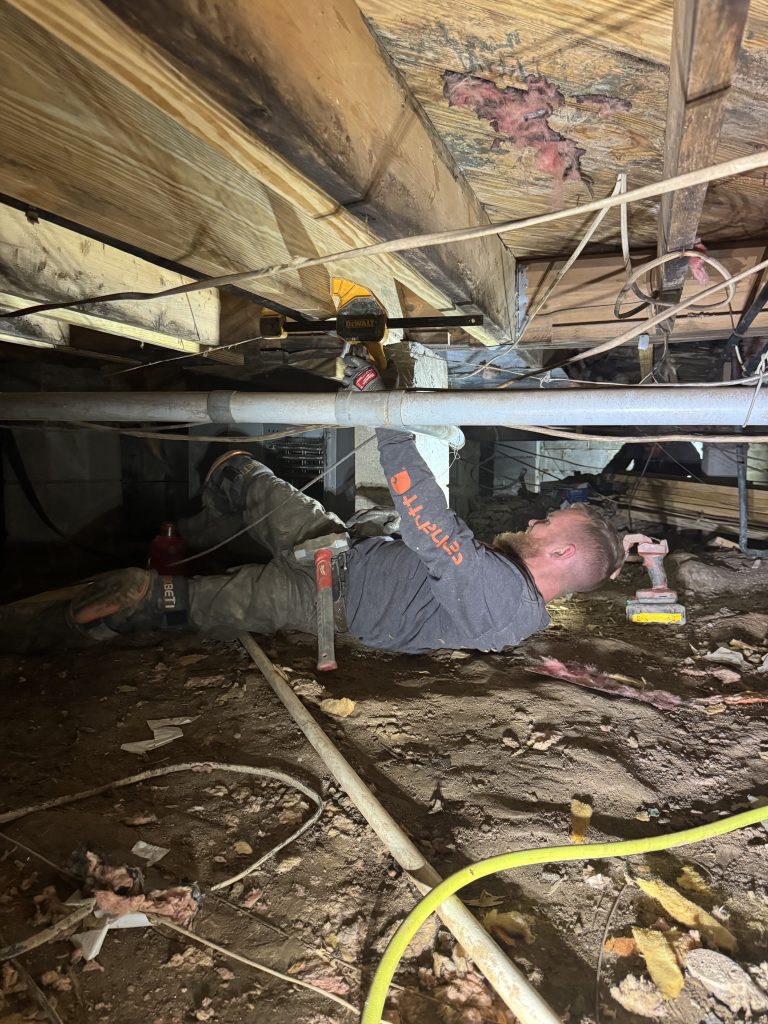
How Added Supports Actually Stabilize the Floor
These repairs work by taking load off overstressed framing members and transferring it down through properly placed supports to the ground. The result is a floor system that feels tighter, more stable, and more consistent from room to room.
Important Notice
Added supports (floor jacks, posts, and beams) are designed to reinforce and stabilize a floor system when the framing is sound but under-supported. If framing is compromised by rot or termites, the correct fix may involve repairing or replacing damaged wood first, then supporting it properly.
What We Install
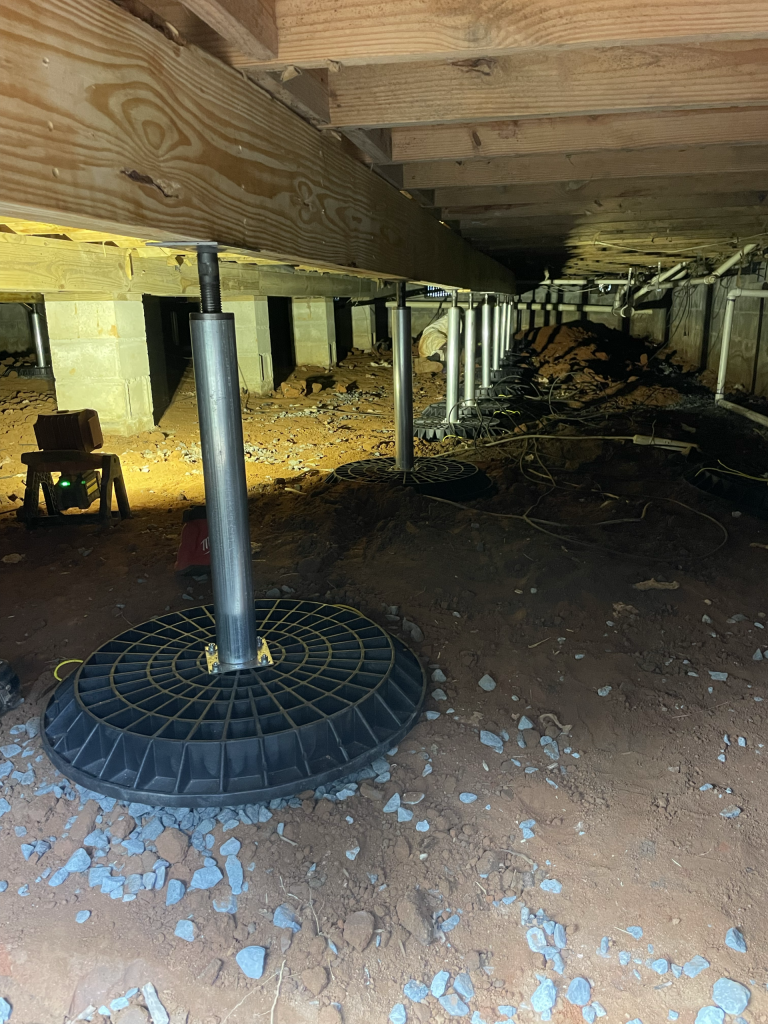
We use adjustable steel floor jacks/support posts rated for over 10,000 lbs, installed on a permanent composite footer base that sits on a gravel footing. This system is backed by an ICC rating, meaning it has been tested to meet load and building code requirements.
Why Homeowners Choose Structural Repair
Structural issues have a quiet way of stealing comfort. You adapt. You step around that spot. You stop trusting the floor the way you used to.
Repair changes that.
Benefits Homeowners Care most about
- Floors feel solid again, less bounce, less movement, fewer surprises
- Confidence that the home is supported the right way
- Repairs that address the cause, not just the symptom
- A clear plan and straightforward pricing before work begins
- Stronger long-term support where it matters
If you want a simple next step, start with an inspection. We’ll tell you what’s happening and what it would take to fix it.
Floor Jacks and added Beam FAQs
How do you decide where supports go?
We evaluate load paths, spans, and movement patterns, then place supports where they actually carry and reduce load correctly.
What causes dips near openings or hallways?
Concentrated loads, long spans, or missing support points commonly show up near doorways, openings, and hallway lines.
Can you reduce floor bounce without replacing the floor?
Yes, often. Reinforcing from below with posts/jacks, beam support, and/or joist stiffening can reduce bounce without tearing out flooring.
Do I need one post/jack or a full beam system?
A single post/jack works for a localized dip (point load). A beam with multiple supports is better when a room or hallway needs wider stabilization.
Do floor jacks permanently fix sagging floors?
They can when installed correctly with proper placement and footings. The goal is long-term stabilization, not a temporary lift.
Do floor jacks permanently fix sagging floors?
They can, when installed correctly and used as part of the right repair approach. The important part is placement, load support, and matching the solution to what the structure needs.
How do you decide where supports go?
We evaluate load paths, spans, and movement patterns, then place supports where they actually carry and reduce load correctly.
What causes dips near openings or hallways?
Concentrated loads, long spans, or missing support points commonly show up near doorways, openings, and hallway lines.
Can you reduce floor bounce without replacing the floor?
Yes, often. Reinforcing from below with posts/jacks, beam support, and/or joist stiffening can reduce bounce without tearing out flooring.
Do I need one post/jack or a full beam system?
A single post/jack works for a localized dip (point load). A beam with multiple supports is better when a room or hallway needs wider stabilization.
Do floor jacks permanently fix sagging floors?
They can when installed correctly with proper placement and footings. The goal is long-term stabilization, not a temporary lift.
Do floor jacks permanently fix sagging floors?
They can, when installed correctly and used as part of the right repair approach. The important part is placement, load support, and matching the solution to what the structure needs.
How do you decide where supports go?
We evaluate load paths, spans, and movement patterns, then place supports where they actually carry and reduce load correctly.
What causes dips near openings or hallways?
Concentrated loads, long spans, or missing support points commonly show up near doorways, openings, and hallway lines.
Can you reduce floor bounce without replacing the floor?
Yes, often. Reinforcing from below with posts/jacks, beam support, and/or joist stiffening can reduce bounce without tearing out flooring.
Do I need one post/jack or a full beam system?
A single post/jack works for a localized dip (point load). A beam with multiple supports is better when a room or hallway needs wider stabilization.
Do floor jacks permanently fix sagging floors?
They can when installed correctly with proper placement and footings. The goal is long-term stabilization, not a temporary lift.
Do floor jacks permanently fix sagging floors?
They can, when installed correctly and used as part of the right repair approach. The important part is placement, load support, and matching the solution to what the structure needs.
Serving the Upstate of South Carolina
Foundation and crawl space repair across twelve counties of the Upstate and beyond. Hover a city to see it on the map. Not listed? Call and ask. If we don't cover you, we'll tell you straight.